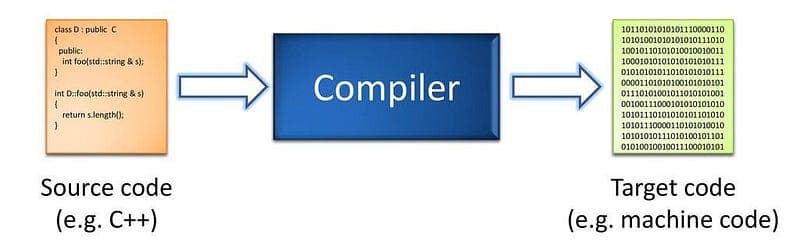
Have you ever wondered how your high-level code gets transformed into machine instructions? Or perhaps pondered the magic behind turning human-readable text into a format a machine understands and executes? If so, you’re in for an enlightening journey! Building a compiler is a rite of passage for computer scientists and an unparalleled learning experience for every developer.
Why delve into compiler construction?
- Deepened Understanding: The art of compiler design goes beyond the surface, delving deep into the intricate ballet of how code is parsed, optimized, and translated. This deeper understanding makes you appreciate the nuances of programming languages, enabling you to write more efficient and cleaner code.
- Problem Solving: Designing and implementing a compiler will test and refine your problem-solving skills. From lexical analysis to code generation, each stage presents its unique challenges and rewards.
- Diverse Knowledge Gain: It’s not just about translation; it’s about optimization, data structure utilization, algorithms, and understanding the architecture of underlying machines. This diverse knowledge base can be applied in numerous software development and computer science areas.
- Low-Level Appreciation: In an era dominated by high-level languages and frameworks, understanding the intricacies at a lower level sets you apart. You get a clearer picture of performance implications, memory management, and how different constructs affect machine instructions.
By the end of this guide, you won’t just have built a simple compiler; you’ll have embarked on a journey that brings clarity to many of the abstract concepts in software development. Even if you don’t end up professionally in the niche field of compiler design, the insights gained can elevate your coding prowess in myriad unexpected ways.
So, are you ready to embark on this illuminating journey? Let’s start by understanding the language we’ll be compiling!
Step 1: Choose a Language Specification
For this guide, we’ll define a simple language called MiniLang. It will support:
- Integer literals
- Addition and subtraction
The grammar is:
<expression> ::= <number>
              | <expression> + <expression>
              | <expression> - <expression>
Step 2: Lexical Analysis (Tokenizing)
This step converts source code text into a list of tokens.
import re

def tokenize(code):
    return re.findall(r'\d+|\+|-', code)
Step 3: Parsing
Convert the flat list of tokens into a structured format (often an Abstract Syntax Tree, AST). For simplicity, we’ll use nested lists.